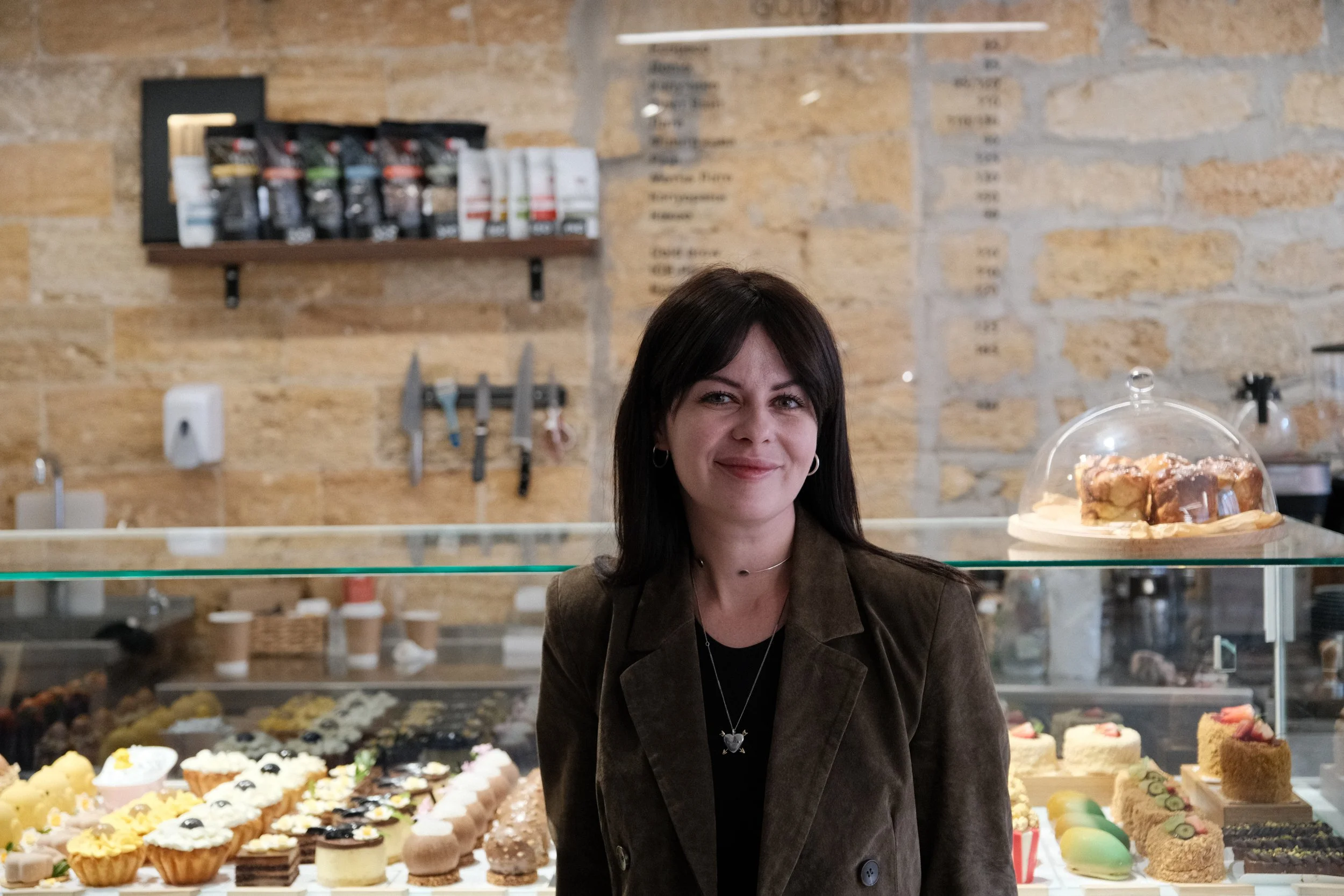
Lera, café owner
Лера, власниця кав’ярні
Lera is from Kherson, where she trained as a teacher. In 2016, she opened a small coffee place called Godshot. In the beginning, she baked cakes at home, gradually expanding the business into a bakery and confectionery. Over time, it became more than a café—a place with a steady clientele and a close-knit team.
She remembers the first days of the full-scale invasion with striking clarity. Kherson was close to the front line from the outset, and by the end of February 2022, it was occupied. In those initial days, her priority was her staff- 27 people in total. She made sure they received their salaries so they could manage the uncertainty ahead. She closed the café for about a month, but then reopened it, convinced that maintaining some form of work and routine mattered. Leaving was not her first instinct. In fact, she had planned to open a second café in March 2022.
Under occupation, daily life changed rapidly. Supermarkets were emptied, some looted. By coincidence, Lera had stocked large quantities of flour and ingredients in preparation for 8 March, International Women’s Day. She redistributed these supplies—giving flour to bakeries so they could continue producing bread, donating chocolate to blood donation points. Small gestures, but essential in a city where normal supply chains had collapsed. The occupation left a deep imprint. She recalls tanks moving through the streets, the constant presence of military vehicles. In the evenings, she often kept the lights off in her apartment, trying not to draw attention. One moment remains particularly vivid: being stopped by Russian soldiers, fearing that her 5-year-old son might say something-sing a Ukrainian song, make an innocent remark-that could put them at risk.
In April 2022, she decided to leave. Together with her child and a friend, she travelled to Odesa, bringing only the essentials. What should have been a three-hour journey took eleven. At first, she expected to stay for a month or two. She recalls the moment she first entered a fully stocked supermarket in Odesa after leaving Kherson-it felt almost unreal after weeks of scarcity. Odesa felt, in some ways, familiar-open, with a certain Mediterranean atmosphere. She adapted quickly. Meanwhile, her café in Kherson continued to operate under occupation. Orders came from Ukrainians abroad who wanted to support relatives still in the city. Lera coordinated everything remotely-receiving requests via Instagram, passing them on through secure channels to her team, who then delivered cakes and products across Kherson. When communication failed, her café became a physical message point, where people left notes for one another.
She remembers 11 November 2022, the day Kherson was liberated. When she called her father, he could hardly believe that Russian forces had withdrawn. Since then, she has not returned. The continued attacks on the city make it too dangerous.
In May 2023, she reopened her café in Odesa’s city centre. Today, around eighty percent of her staff are from Kherson, many of them former employees. Rebuilding the business was not without difficulty, but she found support. Local residents welcomed her, and even the designer of the café initially offered his work free of charge upon learning her story. When the café opened, hundreds of people came-not only for coffee and cakes, but to show solidarity.
Adjusting, however, took time. For nearly two years, she hesitated to call Odesa “home.” Only gradually-through her child’s school, new friendships, and daily routines-did the city begin to take on that meaning.
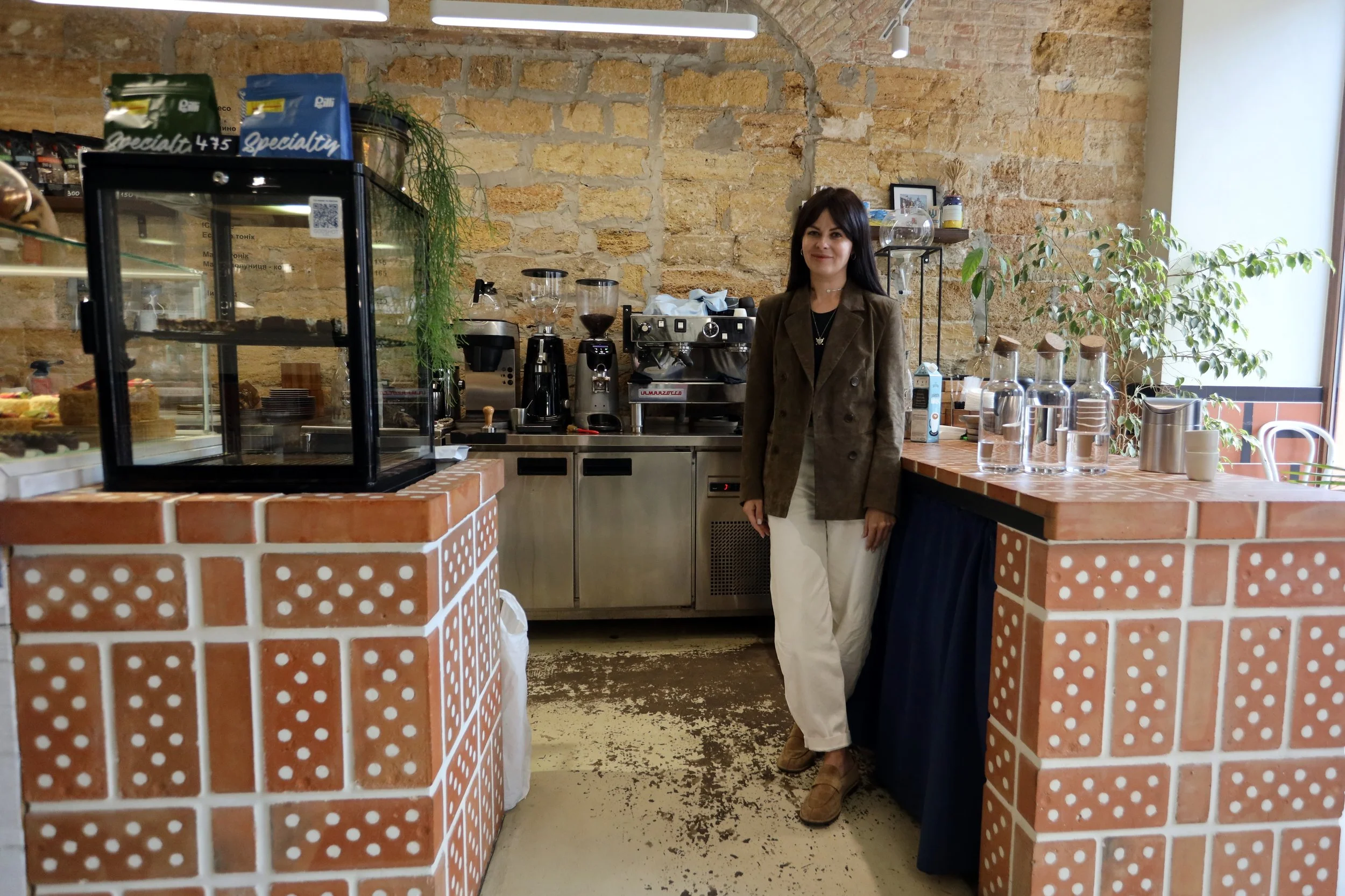
Her perspective on risk is shaped by what she experienced in Kherson. Air-raid alarms in Odesa do not provoke the same fear. “We are from Kherson,” she says, as a way of explaining a certain resilience. She focuses instead on maintaining stability for her staff and keeping the business running. This is not always easy. Power cuts, especially in winter, have made operating a café costly. Generators and fuel added significant expenses, at times pushing her to consider closing.
She has not personally encountered hostility as an internally displaced person. On the contrary, she speaks of consistent support. Still, she notices changes in the city. There are fewer people, and customers spend more cautiously. Seasonal fluctuations matter more now. The summer months, with more visitors, bring relief. She hopes for the same in the coming season. Today, Odesa is where she lives, where her child goes to school, where she has built a new network. Yet Kherson remains close-geographically and emotionally. Many of her relationships are still tied to the city she left behind. The distance between the two places is short on a map, but shaped by very different realities.
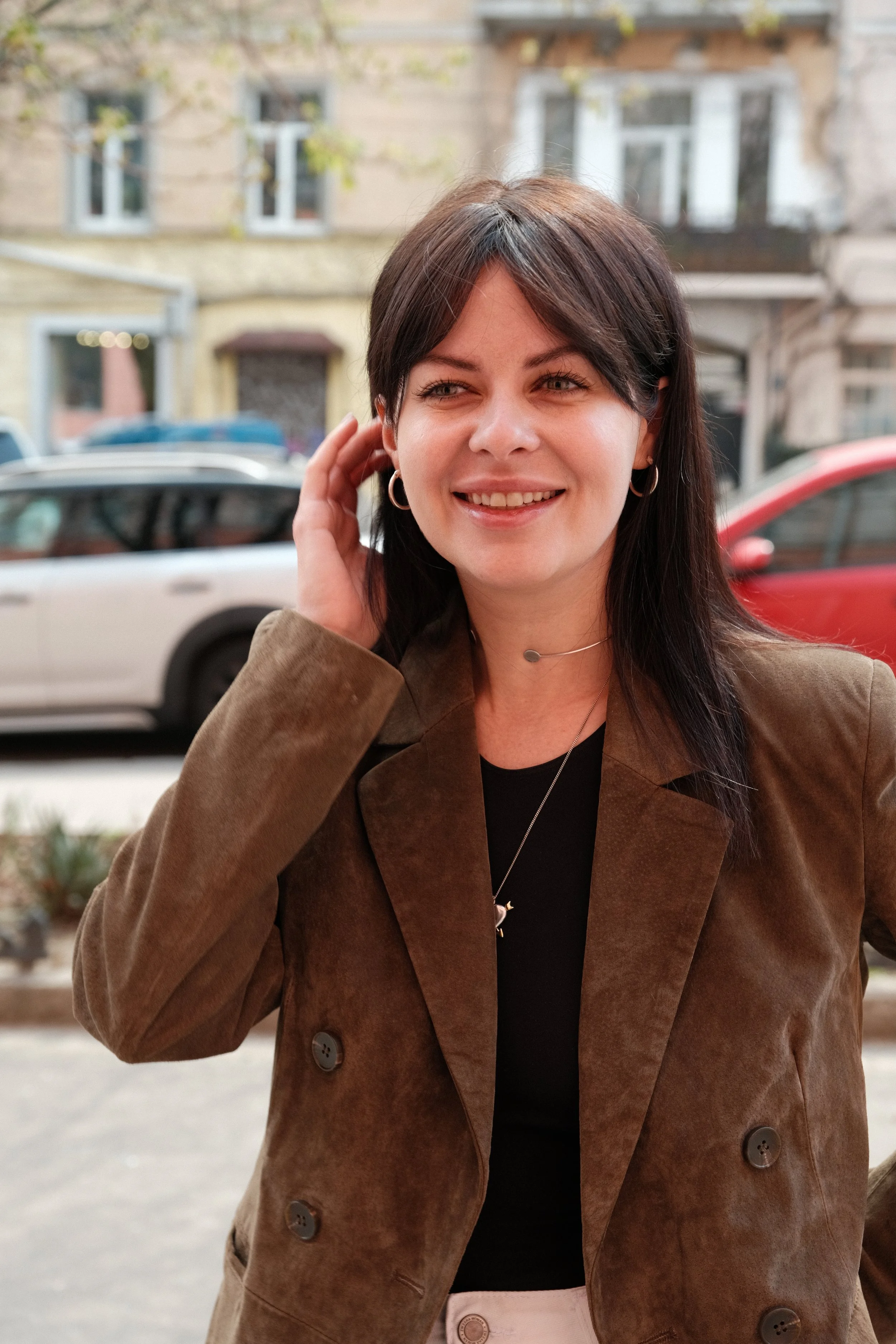
Лера - вчителька за освітою, але рестораторка за покликанням. У 2016 році в рідному Херсоні вона відкрила невелику кав’ярню Godshot. Починалося все з домашньої випічки, яка з часом переросла у повноцінну пекарню та кондитерську. Для міста це було не просто місце, де п’ють каву, а простір зі своєю спільнотою та згуртованою командою з 27 професіоналів.
Перші дні повномасштабного вторгнення закарбувалися в пам'яті з кінематографічною чіткістю. Херсон опинився в окупації майже миттєво. Пріоритетом Лери стали люди: вона подбала, щоб кожен працівник отримав зарплату в цей час тотальної невідомості. Хоча кав’ярню довелося закрити на місяць, згодом вона відновила роботу — Лера вірила, що звична рутина є ліками проти відчаю.
В окупаційній буденності звичні речі стали дефіцитом. У Лери залишилися великі запаси борошна та інгредієнтів, підготовлених до 8 березня. Ці ресурси стали стратегічними: вона передавала борошно пекарням для випікання хліба, а шоколад жертвувала пунктам здачі крові.
«Окупація навчила жити в тіні. Ми не вмикали світло ввечері, щоб не привертати уваги. А найбільшим страхом було те, що мій п’ятирічний син може випадково заспівати українську пісню чи сказати щось невинне, але небезпечне перед російськими військовими».
У квітні 2022 року Лера прийняла складне рішення виїхати. Шлях до Одеси, який раніше тривав три години, розтягнувся на одинадцять виснажливих годин. Вона згадує свій перший візит до одеського супермаркету як щось ірреальне: після тижнів порожніх полиць у Херсоні, достаток продуктів здавався картинкою з іншого життя.
Одеса зустріла її знайомим морським вайбом. Поки Лера облаштовувалася на новому місці, її херсонська кав’ярня продовжувала працювати в окупації. Це був унікальний формат спротиву: українці з-за кордону замовляли через Instagram десерти для рідних, що залишилися в місті, а команда Лери через захищені канали координувала доставку. Коли зникав зв'язок, кав’ярня ставала офлайн-хабом, де люди залишали один одному паперові записки.
11 листопада 2022 року - день звільнення Херсона - став одним із найщасливіших у її житті. Проте через постійні обстріли повернутися додому досі неможливо.
У травні 2023 року Лера відкрила кав’ярню в самому центрі Одеси. Це не просто бізнес, а справжній «острів Херсонщини»: 80% персоналу - це її люди, які працювали з нею ще вдома. Підтримка одеситів була вражаючою: дизайнер відмовився від гонорару, дізнавшись її історію, а в день відкриття сотні людей прийшли не просто за кавою, а щоб особисто підтримати власницю.
Сьогодні Лера каже: «Ми з Херсона», і в цій фразі - вся її стійкість. Повітряні тривоги в Одесі не викликають у неї паніки, бо її досвід загартований значно гіршими обставинами. Вона зосереджена на стабільності: попри витрати на генератори під час блекаутів та економічні труднощі, вона продовжує працювати.
Одеса поступово стає домом - через школу сина, нові знайомства та щоденні ритуали. Херсон же залишається в серці — географічно близьким, але поки що відділеним реальністю війни. Проте Лера точно знає: де б вона не була, її «Godshot» завжди буде місцем, де панує тепло та незламність.